
The Price and Time of Shipping Machinery and Equipment from China
As global manufacturing continues to upgrade towards intelligence and automation, the position of Chinese machinery and equipment in the international market is further consolidated. Entering 2026, overseas buyers purchasing Chinese machinery and equipment will no longer focus solely on price advantages, but will place greater emphasis on the stability and compliance of transportation solutions and the overall delivery experience. How to safely and punctually transport machinery and equipment from China, and what are the price and time involved? These factors have become increasingly important to customers.
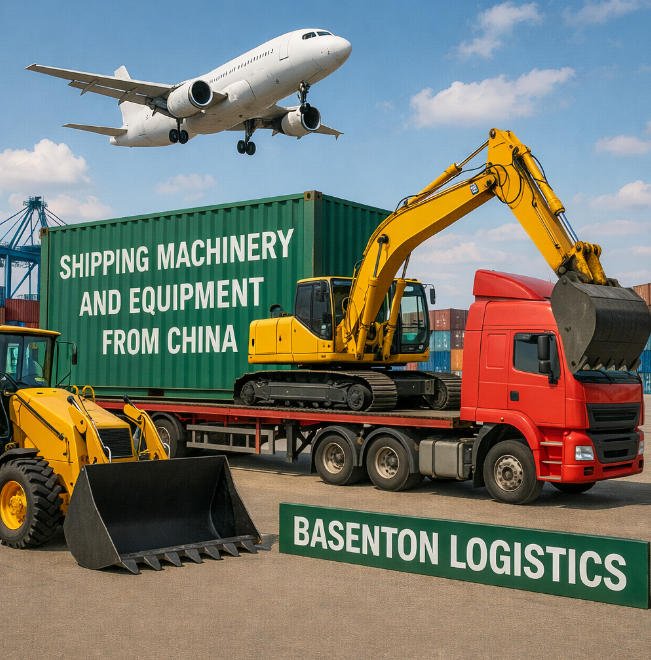
Guide to Importing and Shipping Machinery and Equipment from China 2025
Global Demand Trends for Chinese Machinery in 2026
In 2026, the continued growth of infrastructure and industrial projects in the Middle East, Africa, Southeast Asia, and Latin America is driving demand for engineering machinery, production equipment, and complete sets of machinery from China. These goods are typically large, heavy, and structurally complex, posing higher demands on international transportation.
Unlike the earlier trend of primarily “complete machine procurement,” more and more overseas customers are choosing phased procurement or modular transportation to reduce financial pressure and warehousing risks. This change directly impacts the choice of transportation methods and places higher demands on freight forwarders in terms of containerization, consolidation, and solution design capabilities.
Furthermore, environmental and energy efficiency regulations are gradually tightening in many countries, often requiring more technical documentation and compliance certificates before equipment can be exported. This means that the transportation process is no longer a simple logistics issue, but rather a crucial element throughout the entire procurement, production, and delivery cycle.
Common Types of Machinery and Equipment Shipped from China
Based on the actual export structure, in 2026, China’s exports of machinery and equipment will mainly focus on three categories: construction machinery, industrial production equipment, and power and energy-related equipment. These types of equipment differ significantly in weight, size, and transportation risks, and therefore cannot be handled with a uniform transportation approach.
Construction machinery, such as excavators, loaders, and lifting equipment, often involves oversized or overweight issues, requiring detailed measurements during the booking stage and prior assessment of whether special lifting or deck loading is necessary. Any misjudgment in the early stages can lead to restrictions or delays in port operations.

Production equipment and automated machinery, while relatively manageable in size, have extremely high requirements for shock resistance, moisture protection, and secure fastening. Even a slight displacement during transportation can damage precision components, thus affecting the commissioning schedule of the entire production line.
Shipping Methods for Machinery and Equipment
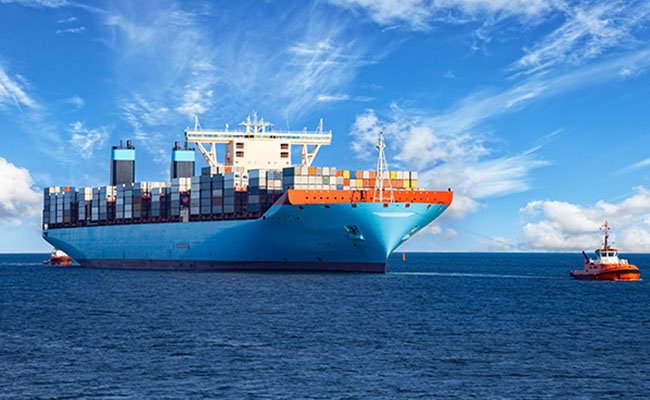
In 2026, sea freight remains the dominant method for exporting machinery and equipment, especially for heavy or large equipment. The appropriate selection of various container types, such as full container load (FCL), open-top containers, and flat rack containers, directly impacts transportation safety and overall cost control.
For equipment with tight delivery deadlines and moderate individual weight, air freight or multimodal air-sea transport is gradually becoming a viable option. Although the cost is relatively higher, these options often offer greater overall value in situations with tight project schedules or when equipment is needed for emergency replacement.
It is worth noting that more and more customers are beginning to focus on “combined transportation methods,” such as air freight for core components and sea freight for the main structure. This split transportation method places higher demands on freight forwarders in terms of coordination, tracking, and final delivery capabilities.
Shipping Costs for Machinery and Equipment from China
The cost of shipping machinery and equipment from China depends heavily on the weight and volume of the equipment, the destination country, the shipping time, and the mode of transportation. Please refer to the table below for reference:
🚢 Sea Freight – FCL (Full Container Load)
| Route (China →) | Destination Ports | 20ft Container (USD) | 40ft Container (USD) | Transit Time (Port to Port) |
|---|---|---|---|---|
| USA West Coast | Los Angeles / Long Beach | 1,800 – 4,400 | 2,800 – 5,000 | 18 – 25 days |
| USA East Coast | New York / Savannah | 2,800 – 5,200 | 3,800 – 5,800 | 28 – 35 days |
| Northern Europe | Rotterdam / Hamburg | 1,600 – 4,200 | 2,600 – 5,300 | 25 – 32 days |
| Southern Europe | Barcelona / Genoa | 1,900 – 4,600 | 2,900 – 5,800 | 28 – 35 days |
| Middle East | Jebel Ali / Dammam | 1,000 – 2,700 | 1,500 – 3,000 | 14 – 21 days |
| Southeast Asia | Singapore / Jakarta | 600 – 1500 | 900 – 1,400 | 7 – 12 days |
| Africa (East) | Mombasa / Dar es Salaam | 2,200 – 3,900 | 2,600 – 4,300 | 28 – 38 days |
| Africa (West) | Lagos / Tema | 2,600 – 4,400 | 3,000 – 5,000 | 35 – 50 days |
| Australia | Sydney / Melbourne | 900 – 2,000 | 1,400 – 3,100 | 16 – 22 days |
🚢 Sea Freight – LCL (Less than Container Load)
| Route | Price Range (USD / CBM) | Handling Time | Notes |
|---|---|---|---|
| China → USA | 90 – 150 / CBM | +5–8 days | Extra consolidation & deconsolidation |
| China → Europe | 80 – 140 / CBM | +5–10 days | Not suitable for heavy single units |
| China → Middle East | 70 – 120 / CBM | +4–7 days | Cost-effective for small machinery |
| China → Africa | 120 – 200 / CBM | +7–12 days | Higher destination handling costs |
🚆 Rail Freight (Machinery Suitable Cargo)
| Route | Container Type | Estimated Cost (USD) | Transit Time |
|---|---|---|---|
| China → Germany / Poland | 40ft | 7,000 – 8,800 | 15 – 22 days |
| China → Central Asia | 40ft | 6,000 – 8,000 | 12 – 18 days |
| China → Russia | 40ft | Case by case | 14 – 20 days |
✈️ Air Freight (Machinery Parts & Urgent Equipment)
| Route | Rate (USD / kg) | Transit Time | Suitable Cargo |
|---|---|---|---|
| China → Southeast Asia | 3.5 – 5.5 | 3 – 5 days | Spare parts, light machinery |
| China → Europe | 4.5 – 6.5 | 3 – 7 days | High-value equipment |
| China → USA | 4.2 – 8.0 | 3 – 7 days | Emergency or critical units |
- Chargeable weight is calculated based on actual weight or volumetric weight, whichever is higher.
The shipping costs for machinery and equipment from China are compiled and provided by Basenton and published on their website first. Other websites are not permitted to reproduce or copy this information.
Machinery and equipment shipping costs are expected to show more distinct structural characteristics in 2026. Besides basic freight charges, packaging, reinforcement, special container types, destination port handling, and potential compliance fees can all have a substantial impact on the total cost.
If you are interested in the costs of shipping from China to different countries, you can click to read more:
How long does it take to ship machinery and equipment from China?
| Route | Estimated Door-to-Door Time |
|---|---|
| China → USA West Coast | 30 – 40 days |
| China → USA East Coast | 40 – 55 days |
| China → Europe | 35 – 50 days |
| China → Middle East | 25 – 35 days |
| China → Africa | 45 – 65+ days |
Note:
For the transportation of machinery and equipment, the total cost and transit time are significantly affected by the following factors:
- Cargo dimensions and weight distribution
- Container type (standard container/open-top container/flat rack container)
- Port handling capacity at the destination port
- Seasonal congestion and booking lead times
As an experienced Chinese freight forwarding company, Basenton Logistics typically evaluates machinery and equipment transportation solutions based on actual operational conditions rather than quoted freight rates, helping exporters avoid hidden costs and unrealistic delivery expectations.
How to Package Mechanical Equipment for Shipping
When shipping mechanical equipment, packaging is far more than simply “putting the goods in a box.” In 2026, more and more overseas customers are requiring detailed packaging plans before shipment, including reinforcement methods, stress point descriptions, and a list of protective materials.
Wooden crates, steel frames, and custom pallets remain the mainstream choices, but for high-value equipment, the importance of rust prevention, moisture-proof materials, and internal cushioning structures has significantly increased. A well-designed packaging solution can directly reduce subsequent insurance claims and equipment repair risks.
Professional handling is crucial during the packing and lifting stages. Practical experience shows that most transportation damage does not occur during transit, but rather during loading and unloading. Therefore, choosing a team with experience in handling mechanical equipment is an indispensable part of risk control.
Customs Clearance and Documentation for Mechanical Equipment
With the continuous improvement of regulatory systems in various countries, customs clearance procedures for mechanical equipment are placing greater emphasis on the completeness and consistency of documentation. Commercial invoices, packing lists, and bills of lading remain fundamental, but the importance of technical parameters, usage descriptions, and origin information has significantly increased.
Some countries require specific equipment to be accompanied by declarations of conformity, energy efficiency reports, or third-party testing documents. Failure to prepare these documents in advance before export can easily lead to customs clearance delays and even incur substantial storage fees.
In practice, experienced freight forwarders will intervene in document review before shipment to help clients identify potential problems. This “proactive customs clearance approach” has become an important trend in the export of mechanical equipment.
What Documents Are Required to Import Goods from China and Clear Customs?
Freight Forwarders for Shipping Machinery and Equipment from China
In 2026, with the increasing complexity of machinery and equipment exports from China, the role of freight forwarders has evolved far beyond traditional booking services, becoming more akin to project coordinators and risk managers. From transportation plan design to on-site operations, from document review to handling unforeseen issues, every step requires extensive experience.
Chinese freight forwarders like Basenton Logistics, which have long served the machinery and equipment export sector, are more familiar with the operational details and potential risks in different countries. They can help clients mitigate problems during the planning stage, rather than passively reacting after problems arise.
For companies planning to export machinery and equipment from China in 2026, choosing the right partner is often more crucial than simply comparing freight costs.
China’s Top 10 International Shipping Companies
Top 10 Freight Forwarding Companies in China in 2025
Common Mistakes When Shipping Machinery from China
Mistake 1: Choosing a shipping method based solely on weight or volume
Many exporters only provide weight and volume during the quotation stage, neglecting the equipment’s structure, center of gravity, and loading/unloading conditions, ultimately leading to unsuitable container types or unexpected surcharges.
👉 Recommendation: Prepare complete dimension drawings, weight distribution information, and photos before requesting a quote.
Mistake 2: Underestimating the importance of packaging
“It’s fine for domestic transportation” does not guarantee safety for international shipping. Sea transport involves vibrations, humidity changes, and multiple loading/unloading processes, which are far more complex than domestic transportation.
👉 Recommendation: Design a packaging solution specifically for export, rather than reusing domestic packaging.
Mistake 3: Delayed document preparation
Insufficient technical data, usage instructions, and compliance documents are one of the main reasons for delays in customs clearance of machinery and equipment.
👉 Recommendation: Prepare export documents concurrently with equipment production, rather than waiting until the goods are ready.
Mistake 4: Neglecting the capabilities of the destination port
Some ports have strict restrictions on heavy equipment lifting and oversized cargo handling. Failure to confirm these restrictions in advance may result in significant additional costs.
👉 Recommendation: The transportation plan should consider the conditions of both the port of origin and the port of destination.
News
Berita Teknologi
Berita Olahraga
Sports news
sports
Motivation
football prediction
technology
Berita Technologi
Berita Terkini
Tempat Wisata
News Flash
Football
Gaming
Game News
Gamers
Jasa Artikel
Jasa Backlink
Agen234
Agen234
Agen234
Resep
Cek Ongkir Cargo
Download Film
