
Shipping from Shenzhen to Manila, Philippines
Cross-border shipping from Shenzhen to Manila, Philippines, has consistently been one of the most active routes in trade between South China and Southeast Asia. Shenzhen, a major export city for Chinese electronics, home furnishings, apparel, and home appliances, has established close and frequent logistical exchanges with Manila. Whether by sea or air, businesses need a reliable, stable, and transparent transportation solution to better control costs and delivery times.
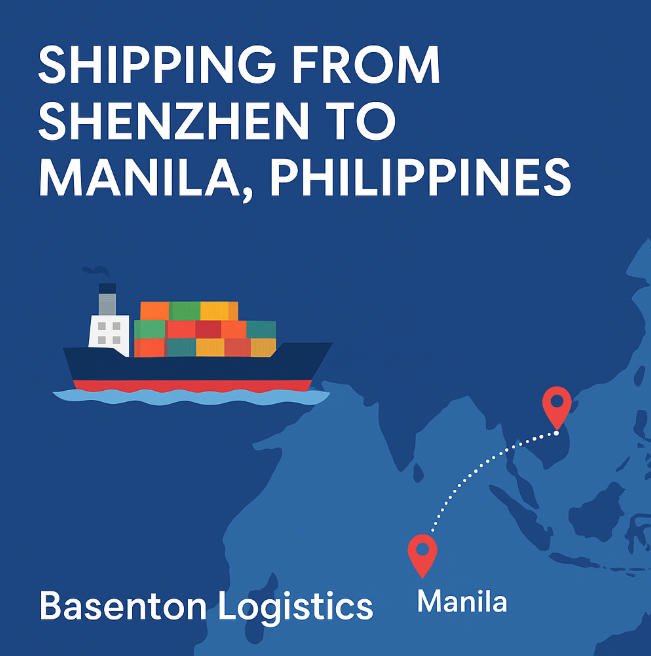
Shipping from Shenzhen to Manila
While the distance between Shenzhen and Manila is not far, cross-border shipping involves multiple stages, including export customs declaration, route selection, preparation of customs clearance documents, and final local delivery. Due to the sustained growth in Sino-Philippine trade, shipping resources are relatively abundant, and a relatively stable service frequency can be maintained for full container load (FCL), less than container load (LCL), and air freight. For most businesses, choosing the appropriate transportation method requires a balance of factors including cargo value, volume, delivery time, and budget.
Manila, as the Philippines’ primary import and export hub, boasts several key ports and airports, such as Manila International Container Terminal (MICT), South Harbor, and Ninoy Aquino International Airport (NAIA), covering the entire country’s logistics needs. The continuously improving handling capacity of these ports enables goods shipped from Shenzhen to enter the local market more quickly.
With the diversification of trade activities, many importers are placing higher demands on the supply chain, such as shorter delivery times, improved cargo visibility and management, and reduced additional costs. These new trends are driving the continuous optimization of logistics services from China to Manila, forming a more flexible transportation system. For exporting companies, understanding these changes helps in developing more precise shipping plans.

Learn more: Shipping from China to Philippines | Door to Door and DDP
Sea Freight from Shenzhen to Manila
Sea freight is the most common way to transport goods from Shenzhen to Manila, favored by trading companies due to its significant cost advantages, stable shipping routes, and mature operational procedures. Especially for bulk purchases or long-term supply, Full Container Load (FCL) can significantly reduce unit transportation costs, while Less than Container Load (LCL) is suitable for mixed cargo from multiple suppliers, reducing warehousing pressure and increasing shipping flexibility.
Shenzhen’s Yantian and Shekou ports have high sailing frequencies, with ships departing for major Philippine ports almost daily. Most vessels use direct routes, eliminating transshipment time, which not only improves transportation efficiency but also reduces the risk of damage or delays en route. For customers with stable cargo volumes, choosing direct routes significantly reduces transportation uncertainty.
However, sea freight can still be affected by uncontrollable factors, such as peak season capacity shortages, port congestion, or changes in weather conditions. Exporting companies should plan their shipping times in advance during peak and off-peak seasons to ensure smooth loading. At the same time, preparing packing lists, commercial invoices, and relevant permits in advance can also avoid delays caused by incomplete documentation.
Air Freight from Shenzhen to Manila
Air freight is suitable for products with strict time requirements or high value, such as electronic components, precision instruments, fashion items, and medical equipment. The Shenzhen Bao’an Airport to Manila NAIA route boasts high flight frequency and stable cargo space availability, making air freight an ideal option for many businesses for rapid replenishment or e-commerce operations.
From cargo arrival at the airport warehouse to completion of security checks, customs clearance, and loading, the entire process can usually be completed quickly if well-planned, making it suitable for urgent orders. After the flight arrives in Manila, the efficiency of customs clearance can vary depending on the type of goods, tax audits, and local holidays; therefore, understanding Philippine customs policies in advance is crucial.
Although air freight costs more than sea freight, it offers significant advantages in terms of timeliness and cargo security. When developing transportation plans, businesses often choose air freight for some high-value or urgently needed goods, while using sea freight for routine replenishment and less sensitive products to optimize overall costs.
Shipping Costs from Shenzhen to Manila
Shipping costs from Shenzhen to Manila vary depending on factors such as season, fuel surcharges, availability of space, cargo type, volumetric weight, and customs requirements. Ocean freight is generally more stable, with a 20ft container costing between $650 and $1800. Air freight and express shipping prices fluctuate more frequently, ranging from $3 to $7 per kilogram.
For importers, it is recommended to consider volumetric weight, actual weight, and potential additional costs when budgeting to more accurately assess overall logistics costs. The table below provides typical reference prices; specific prices should be confirmed based on actual cargo quotes.
| Shipping Method | Pricing Basis | Estimated Cost | Notes |
|---|---|---|---|
| Sea Freight (FCL 20GP) | Per container | $650 to $1,800 | Stable option for large shipments. |
| Sea Freight (FCL 40HQ) | Per container | $950 to $2,500 | Most economical for volume cargo. |
| Sea Freight (LCL) | Per CBM | $50 to $100 | Suitable for mixed or small-volume shipments. |
| Air Freight | Per kg | $3 to $7 | Best for high-value or urgent goods. |
| Express Courier | Per kg | $8 to $15 | Faster but highest cost. |
- Air freight cost: $3 to $7
- Sea freight FCL cost: Approximately $650 to $1,800 for a 20-foot container
- Sea freight LCL cost: $50 to $100 per cubic meter
Learn more: How Much Does it Cost to Ship from China to the Philippines
Shipping Time from Shenzhen to Manila
The shipping time from Shenzhen to Manila is affected by various factors, including the mode of transport, flight frequency, season, and port congestion. Generally speaking, the distance between Shenzhen and the Philippines is relatively short, so even sea freight can maintain a relatively fast turnaround time. For companies seeking stability and cost advantages, full container load (FCL) sea freight is a common choice, typically taking only 5 to 12 days. For goods with strict delivery time requirements, air freight and express delivery offer more flexible arrangements, generally taking only 2 to 5 days. The following reference table can help you quickly understand the estimated delivery time for different modes of transport.
Transit Time Table (Shenzhen → Manila)
| Shipping Method | Route Description | Estimated Transit Time | Notes |
|---|---|---|---|
| Sea Freight (FCL) | Shenzhen Port → Manila MICT / South Harbor | 5–12 days | Fast and cost-effective for bulk cargo. |
| Sea Freight (LCL) | Shenzhen Warehouse → Manila Consolidation Hub | 7–15 days | Includes consolidation and deconsolidation time. |
| Air Freight | Shenzhen Airport → Manila NAIA | 1–3 days | Best for urgent or high-value cargo. |
| Express Courier (DHL/UPS/FedEx) | Shenzhen → Manila | 2–5 days | Ideal for samples or small parcels. |
Learn more: Shipping Time from China to Philippines
Customs Clearance in Manila & Local Delivery
The Philippines has a relatively strict customs clearance system, especially for electronics, food, chemicals, medical supplies, and certain consumer goods, which have specific regulatory requirements. For example, some goods may require an import permit or test reports in advance to ensure compliance with local acceptance standards. In such cases, preparing complete documentation in advance is crucial.
During customs clearance in Manila, tariff assessment and HS code classification often affect overall costs. Therefore, smooth communication between importers and freight forwarders is essential to ensure accurate information and compliant declarations. Many failures stem from inconsistencies in invoice values, unclear packing lists, or incorrect product classification.
After customs clearance, goods are typically delivered by truck to Manila or nearby provinces, where the overall transportation network is relatively mature. If goods need to be transshipped to cities such as Cebu, Davao, or Iloilo, delivery can be continued via inland transportation or domestic flights.
Freight Forwarding from Shenzhen to Manila
In the Shenzhen-Manila freight forwarding process, professional freight forwarders offer more than just transportation; they provide supply chain management services. From factory pickup, cargo inspection, warehousing consolidation, and optimal container type arrangement, to providing transportation cost estimates and assisting with local customs clearance issues, the coordinated process significantly improves cargo flow efficiency.
Furthermore, the common mix of goods, multi-supplier procurement, and complex product combinations in China-Philippines trade make consolidation and LCL (Less than Container Load) services a primary need for many importers. Experienced freight forwarders can select the best solution based on cargo characteristics, avoiding additional costs such as demurrage fees, inspection fees, or delays due to document errors.
Freight Forwarding in Shenzhen: Air Freight, Sea Freight
About Basenton Logistics
In cross-border trade from China to the Philippines, choosing a reliable logistics partner is crucial to ensuring the smooth arrival of goods in Manila. Basenton Logistics has long focused on international transportation services, leveraging its deep understanding of Shenzhen port, the South China supply chain, and the Philippine market to provide clients with flexible, efficient, and transparent logistics solutions. Whether it’s full container load (FCL), less than container load (LCL), air freight, or multi-supplier consolidation, export customs declaration, and Manila customs clearance support, the team can tailor suitable transportation solutions based on the characteristics of the goods, helping businesses reduce uncontrollable risks and additional costs.
With stable delivery times and a comprehensive service system, Basenton Logistics has become a long-term partner for many foreign trade companies, brand owners, and Philippine importers. If you need professional advice or the latest shipping quotes when planning your logistics from Shenzhen to Manila, the Basenton team is always ready to support you.
Basenton Logistics Case Studies: Sea Freight From Guangzhou To Manila Philippines
sumurjp
Berita Olahraga
News
Berita Terkini
Berita Terbaru
Berita Teknologi
Seputar Teknologi
Drama Korea
Resep Masakan
Pendidikan
Berita Terbaru
Berita Terbaru
Berita Terbaru
